
net-zero

gcp Consulting 2025 round-up

Construction is a complex process with a growing list of statutory requirements which can result in delays, increased costs, and watered down design aspirations. To avoid these pit falls it is important to appoint an experienced design team who understand the impacts current regulations can have on building layout and system strategies. Communication is key to ensuring changing requirements are highlighted and discussed in sufficient detail to avoid future headaches.


What We Offer

gcp isn’t just an architecture practice. gcp integrates a range of consultancy services to provide our clients with holistic designs which consider multiple specialisms from sustainability to health and safety.

Since gcp Consulting was launched in 2006 we have built on our existing knowledge to provide SAP assessments, Passivhaus design, Principal Designer CDM role, PAS 2035 Retrofit Design, whole life carbon assessments, thermal bridge calculations, net-zero assessments, environmental KPI analysis, and seminars.

This wealth of experience has led to gcp working with industry leaders including UKGBC and Future Homes Hub to develop sustainability tools and enable the whole industry to achieve our statutory net-zero commitments.


SAP Assessments

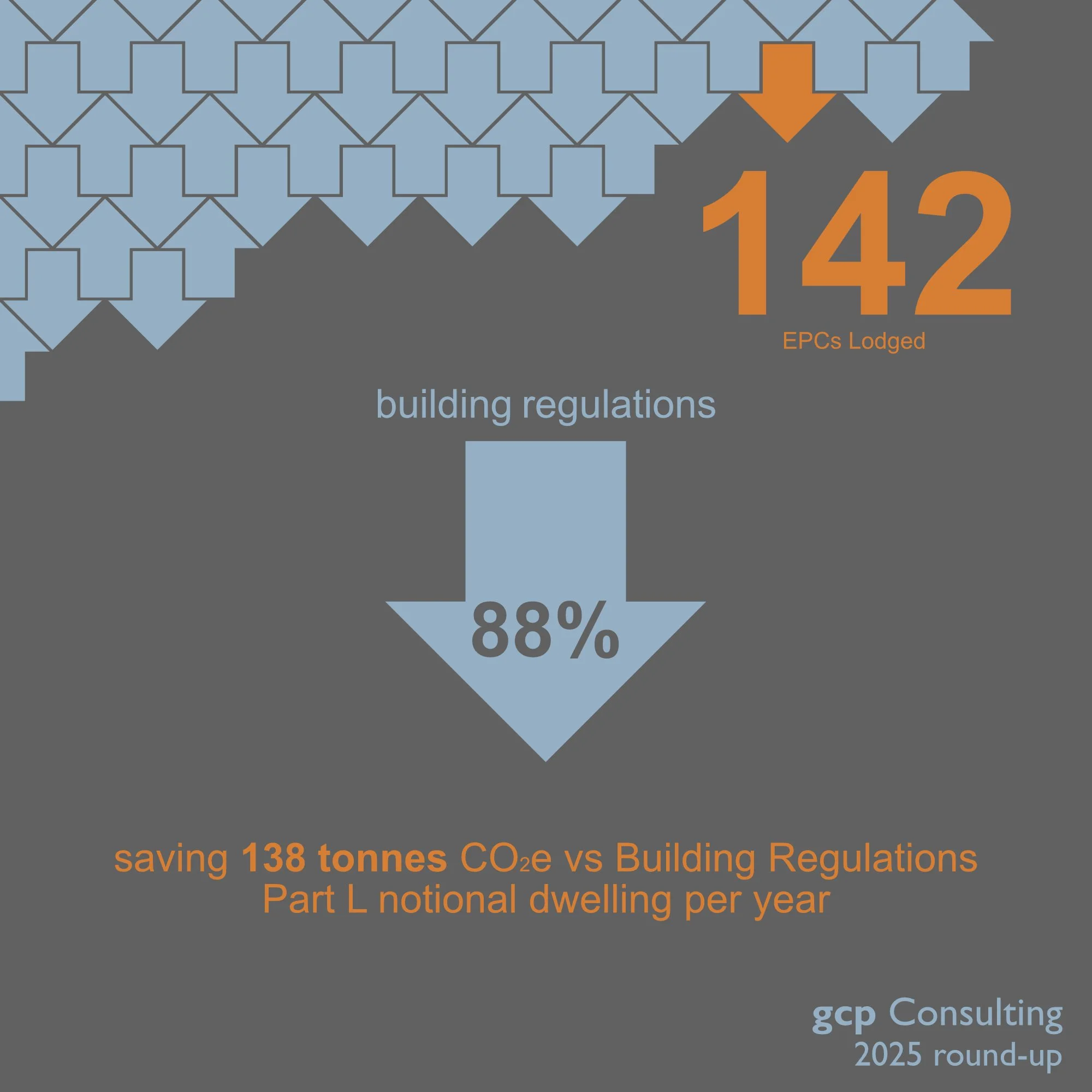
SAP assessments are a statutory requirement for demonstrating compliance with Building Regulations Approved Document L. SAP software can also be used to demonstrate compliance with local planning authority requirements for carbon reduction. Since 2006 gcp has been responsible for lodging thousands of EPC certificates, building a wealth of experience in the process. So far in 2025, gcp has lodged 142 EPC certificates affording an 88% betterment on building regulations carbon emissions and saving a total of 138 tons of CO2 emissions per year.


Net Zero Assessments

Net zero is a complex topic and can cover a wide range of parameters. It is important to confirm the scope of any net zero commitment before commencing the design process as on-site energy generation can be hugely impacted by building typology, orientation, and roof design.

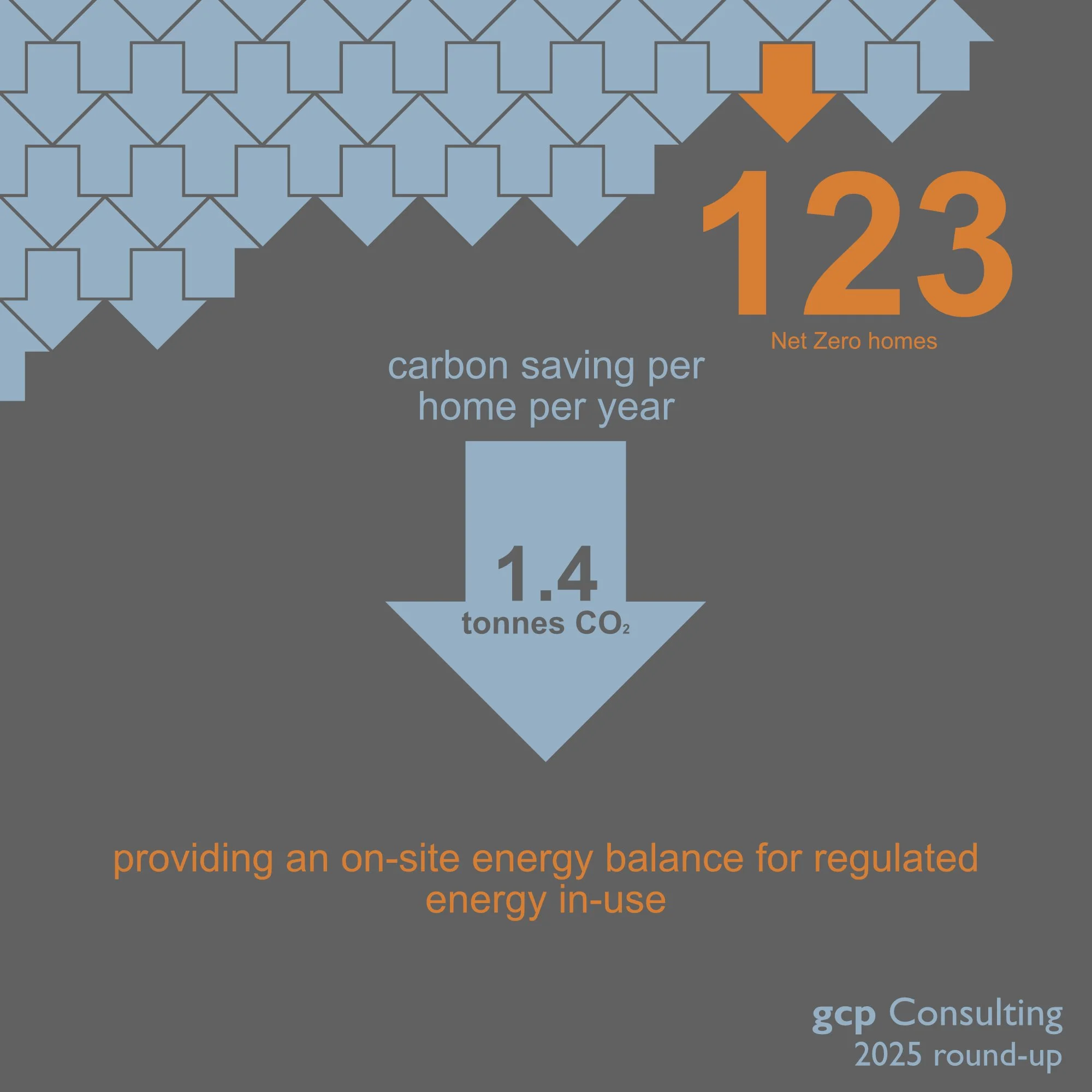
In preparation for the Future Homes Standard and local authority net zero targets gcp has worked with clients to demonstrate how net zero can be achieved with minimal cost impacts to both developer and occupier. So far in 2025 gcp has demonstrated net zero compliance for regulated energy on 123 homes. This is an average annual carbon saving of 1.4 tons CO2 per home.


Whole Life Carbon Assessments

The regulation of operational energy has greatly reduced carbon emissions in the built environment over the last 15 years. As the carbon reduction impact of operational energy lessens, the emissions relating to embodied carbon become a much larger piece of the pie. gcp wanted to understand whole life carbon (WLC) so we could best support our clients in achieving the new standards being adopted by local planning authorities across the country.

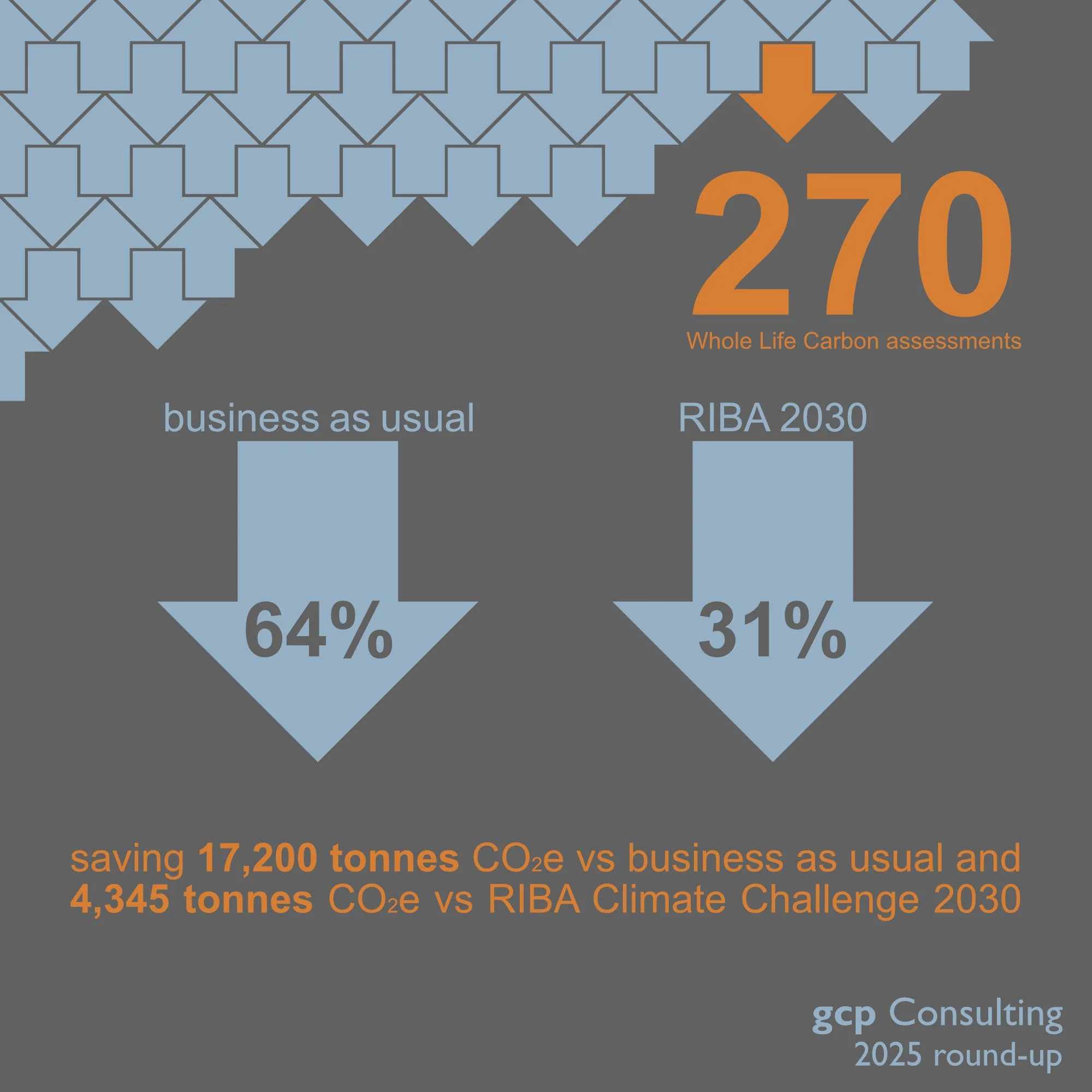
gcp worked alongside Goram Homes, an early adopter of WLC targets, to understand the emissions from their existing developments, and advise on easy wins for carbon reductions in future schemes. So far in 2025, gcp has undertaken 270 WLC assessments demonstrating a 64% carbon reduction on business as usual, and a 31% carbon reduction on the RIBA 2030 targets.

Benefits of Integrated Consultancy Services

gcp’s consultancy team is fully embedded within its architectural design team so our experience is naturally incorporated into every project. Early-stage awareness of wider project requirements can greatly improve project efficiency:

  • Awareness of SAP requirements pre-planning stage allows sites to be set out with suitable wall thicknesses for u-value requirements, roof forms for solar PV generation, and service cupboards for MEP systems.

  • Sustainability and health and safety requirements can be incorporated from the outset to ensure the architectural language isn’t watered down through design alterations.

  • The ability to offer a range of services makes gcp more agile when it comes to decision making and collating planning/ building regulation packages.

To find out more about how we can support your next project get in touch with Matt Bonney – matt.bonney@gcparch.co.uk

gcp are a Zero Bills Certified Assessor

gcp are pleased to announce their partnership with Octopus Energy as a Zero Bills Certified Assessor.

This builds on our strong heritage of sustainability within the built environment by targeting Net Zero and reducing bills for occupants.

The Octopus Energy website introduces Zero Bills as a tariff which “enables customers to move into homes that are fully kitted out with state-of-the-art green tech – including a heat pump, a battery and solar panels – with no energy bills guaranteed for 5 to 10 years”

Zero Bills aligns with and surpasses the proposed Future Homes Standard which seeks to improve sustainability regulation in the UK. Learn more about the Zero Bills strategy here - https://octopus.energy/press/octopus-launches-global-zero-bills-standard-for-energy-bill-free-living/

At gcp we can undertake detailed energy assessments (SAP/PHPP) and whole life carbon assessments to ensure our designs are as sustainable as possible. Zero Bills now offers the cherry on the cake which guarantees no energy bills for occupants.

If you are interested to learn more about Zero Bills or how gcp can support your sustainability goals, please contact matt.bonney@gcparch.co.uk

gcp Seminars: Passivhaus / Retrofit / Whole Life Carbon

At gcp we know that the growing terminology around low carbon housing is confusing and practical implications on development can seem unclear. As early advocates for Passivhaus and low carbon design, we want to help our clients explore how high quality and sustainable housing can be achieved.

We offer seminars on Whole Life Carbon, Passivhaus, Net-Zero and Retrofit. Please let us know if you would like us to drop by and talk with your team!

t 0117 967 6286

e mail@gcparch.co.uk

gcp Shortlisted for Novers Hill Design Competition


gcp are delighted to announce that we have been shortlisted in the Novers Hill Design Competition and will move forward to Stage 2 of the process. Below we share some of our process and considerations when appoaching a new scheme.

Background

Goram Homes, in partnership with the Bristol Housing Festival, launched a design competition on 2nd March 2023 for a new housing development in Knowle West.

Situated just off Novers Hill, the brownfield site bounds the ecologically significant Western Slopes, with fantastic views over Southwest Bristol.

Having previously worked with Goram Homes to report on and reduce their whole life carbon emissions, we jumped at the chance to produce a sensitive, low carbon exemplar design for the Knowle West community.

Our Process

Context is always important, but especially on such an ecologically significant site. Our process started by analysing the site from an ecological, social, geographical and historical point of view.

This allowed us to identify the areas which could be developed whilst limiting any negative impacts on existing habitats. The brownfield elements of this site offered an obvious development opportunity due to the level topography and lack of ecology.

Taking the developable area, we could carve out service routes and ancillary spaces, leaving the most suitable areas for the proposed dwellings.

Working with a concept massing allows many ideas to be tested at a site-wide level to investigate their suitability. We took this opportunity to adapt the form to better make use of the site’s natural resources such as sunlight and views.

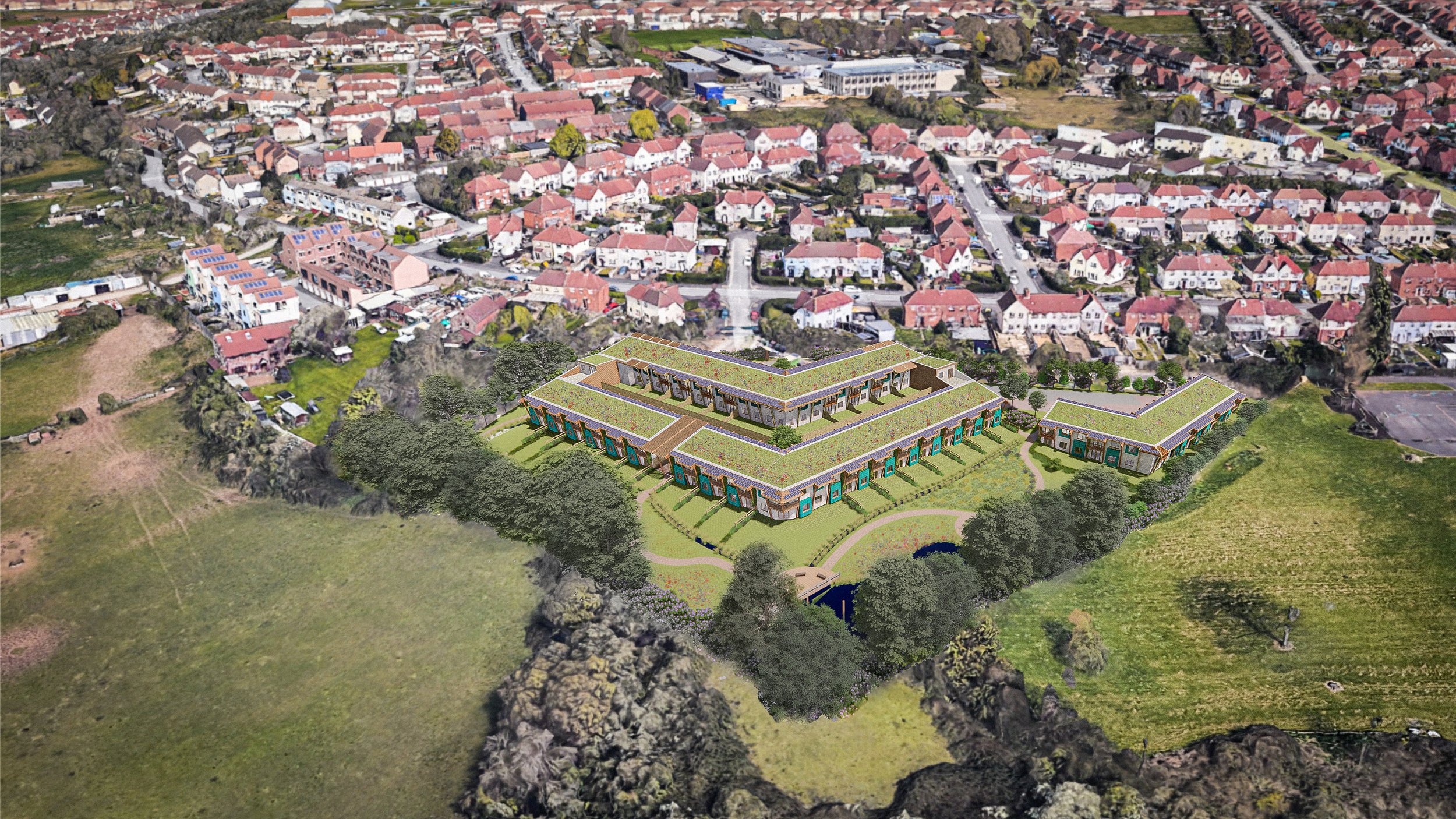
Retaining a connection between Knowle West and the Western Slopes was a key part of integrating this development into the existing community. To encourage this, we chose to slice through the massing to form a physical link between the wonderful green spaces and the wider community.

Creative stacking of gardens allowed us to achieve the required housing densities without damaging any further green space. This stacking also made the most of natural daylighting and views.

Our Team

We selected a competition team with a wide ranging but complimentary skillset to efficiently deliver this competition entry.

  • Part 2 Architectural Assistant: Matt Taylor


The core team of Matt B, Matt T and Owen developed our design under the excellent stewardship of Sarah. Regular concept discussions between the core team allowed for speedy testing and evolution of ideas. Concepts were then presented to the wider office during several design reviews in our pin-up space, which helped to hone the proposal and focus the mind.

Holistic Design

We pride ourselves on being able to take projects from the first sketch all the way through to delivery. Part of this is thinking ahead and making sure we consider the detail within the big picture. Whilst this was a Stage 1 design, we wanted to ensure that buildability, sustainability and affordability were all considered to ensure smoother development as the design progresses. It is much easier to design in efficiency at an early stage than try to adjust a poor design further down the line.

In developing our submission, we considered:

  • Whole life carbon emissions by improving thermal performance, choosing low carbon materials and maximizing solar gains

  • Materials to allow for ease of construction, minimal ecological disruption and easy airtightness

  • Going beyond biodiversity net gain by retaining as many habitats as possible, enhancing existing grasslands and planting trees/vegetation to offset carbon emissions

  • Net Zero emissions in operation through an efficient form, fabric first design and large solar PV arrays

  • Affordability by eliminating unnecessary junctions/details, minimizing energy/running costs and reducing the overall building mass.

The Submission

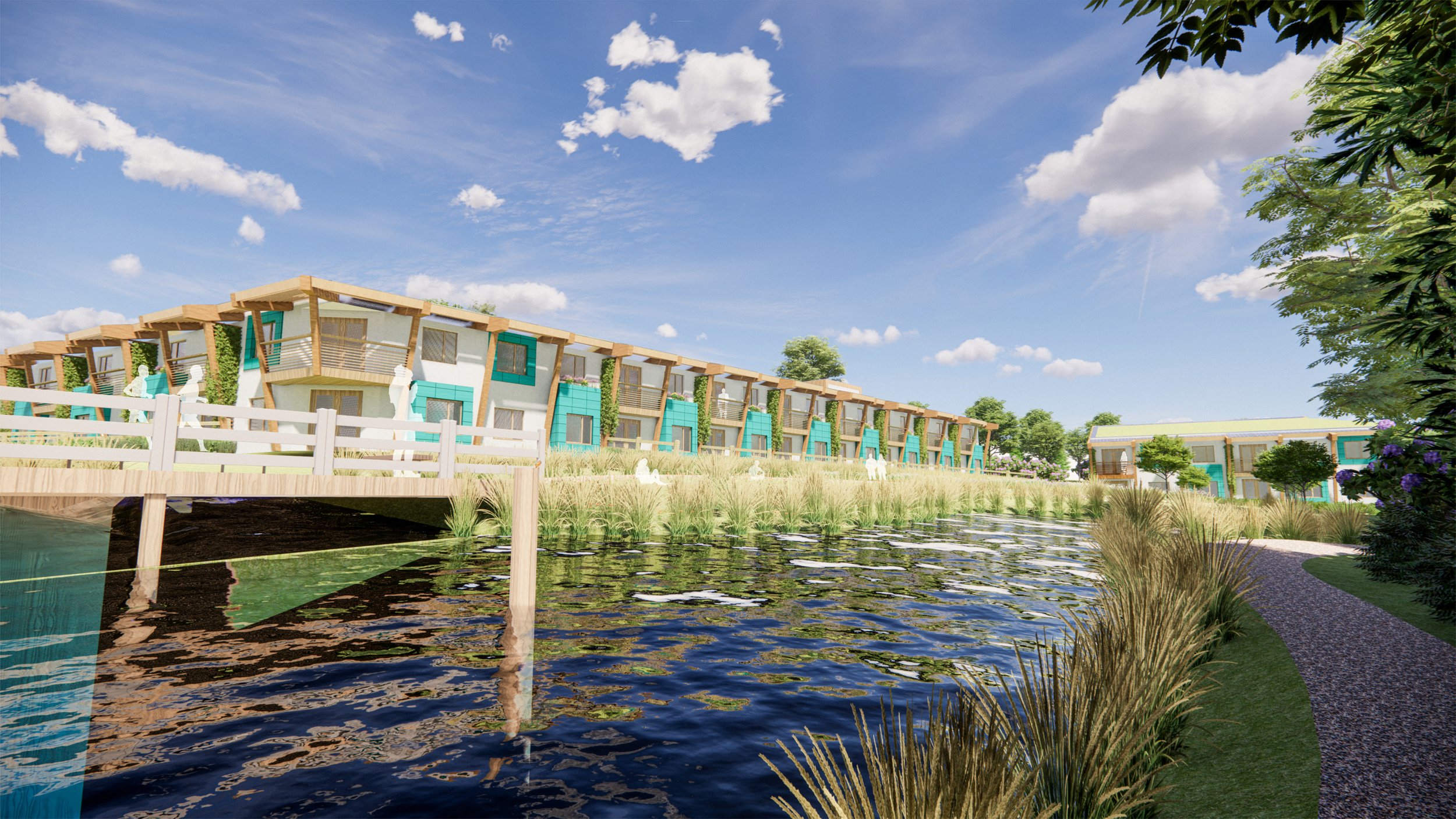
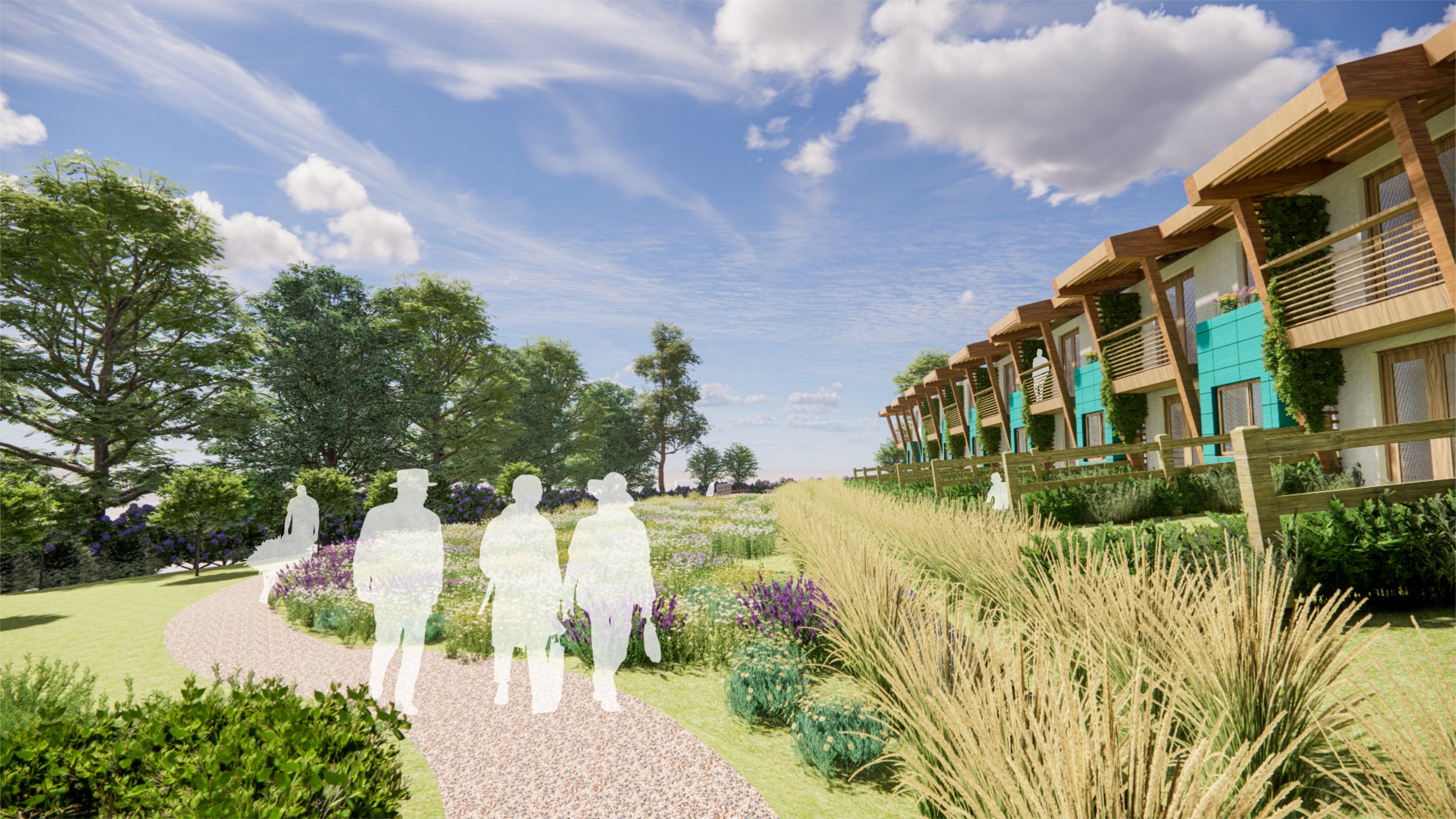
Detailed site analysis and holistic design allowed us to generate an accurate impression of how the development could look.

BaNES Local Plan Update

BaNES have kicked off 2023 with a “groundbreaking” new policy which sets a precedent for low carbon planning policy across the country.

Housing in BaNES will now need to achieve net-zero energy in use; meaning all operational energy must be off-set using on site renewables, such as solar PV panels. In exceptional circumstances where this is not possible, BaNES will be operating a carbon credit scheme to offset excess energy by funding sustainable schemes throughout the region, such as installing solar PV on social housing.

Alongside this progressive operational policy, BaNES have also introduced an embodied carbon target of 900kgCO2/m2 for large developments.

Together these two policy changes should mean the whole life carbon of residential developments in BaNES will dramatically reduce in the coming years. However, to see the full picture, we need to compare these policies against other progressive industry guidance.

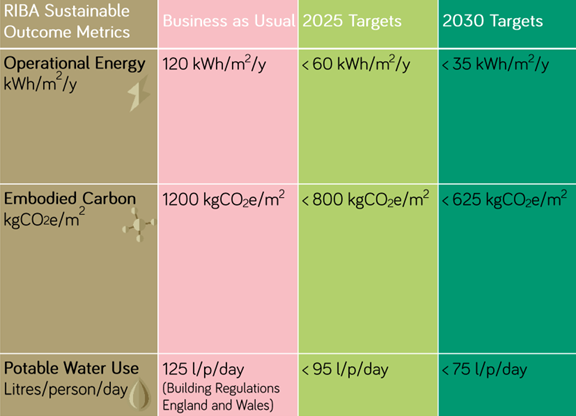
RIBA Climate Challenge 2030 for example sets the following targets for domestic developments:

This guidance suggests we should already be designing for <800 kgCO2/m2 with a 2030 target of <625 kgCO2/m2 embodied carbon, including services which are omitted from the BaNES requirements.

This may seem overly ambitious, but environmentally conscious housing developers are already surpassing these targets with standard forms of construction. We have recently undertaken an embodied carbon assessment for Goram Homes, Bristol City Council’s housing company, in partnership with Vistry Group. Houses at the One Lockleaze development in North Bristol were easily achieving <400 kgCO2/m2 with timber framed construction and <800 kgCO2/m2 with traditional construction for the apartments.

Publishing a target of 900 kgCO2/m2 embodied carbon (not including services) and net-zero operational carbon may inadvertently have a negative effect by encouraging developers to fill rooftops with solar PV to counteract poor thermal performance, rather than investing in fabric first design and integrating low carbon products to achieve buildings with a much lower whole life carbon.

Undoubtably, this is a massive step in the right direction for planning policy in England. Embodied carbon in particular has been screaming out for regulation, and by introducing the industry to concepts such as net-zero and whole life carbon we should see the acceleration of low carbon development we desperately need.

The gauntlet has now been thrown down to all other Local Authorities. I certainly hope Bristol and South Glos will look to match or surpass this policy when their new Local Plans go live in 2024.

gcp offer a whole range of sustainability assessments through gcp Consulting, including whole life carbon assessments. If you need to demonstrate compliance with sustainability targets or would be interested in understanding how well your current developments perform, please get in touch.